
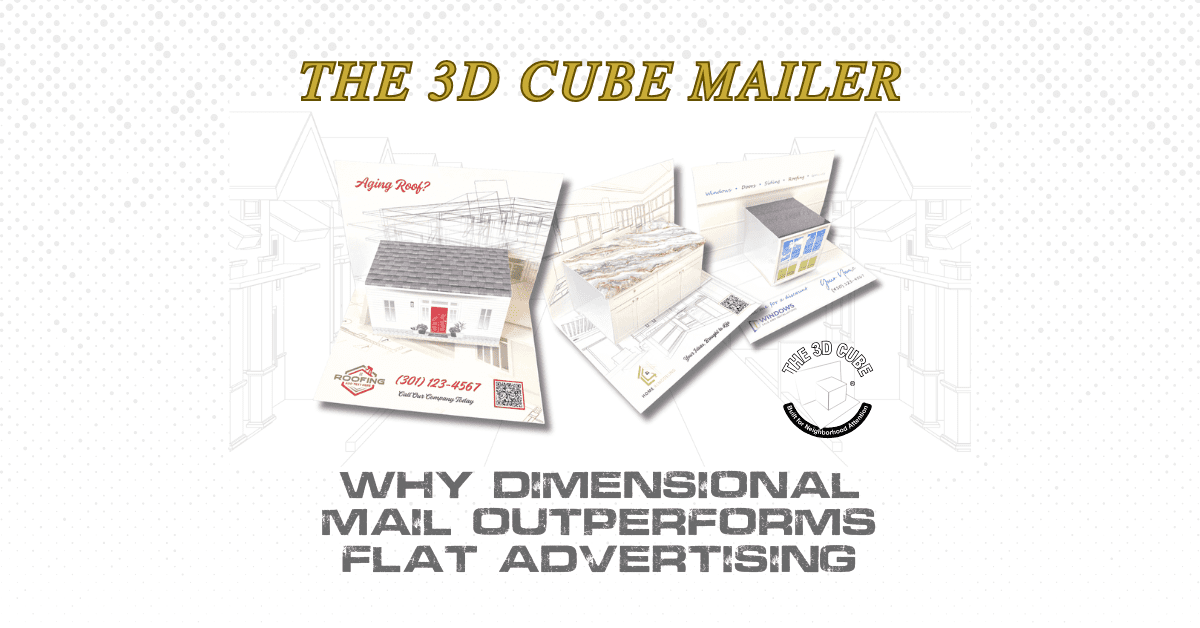
The 3D Cube Mailer
The 3D Cube is a dimensional direct mail format built to generate attention without relying on promotions, discounts, or urgency language. Its performance comes from physical presence, local relevance, and the way homeowners interact with it long after delivery.
Unlike flat mailers designed for quick scanning, the 3D Cube is engineered to be handled, opened, and displayed.
Why Flat Mailers Get Ignored
Flat mailers compete in an environment dominated by bills, notices, and advertising. Most are evaluated in seconds and discarded based on surface cues.
Common Limitations of Flat Mail
Promotional language triggers ad filtering behavior
Discount driven messaging shortens relevance
Thin formats blend into daily mail volume
Little reason to keep the piece once read
Even well designed postcards struggle to earn time, especially when messaging depends on limited time offers.
How the 3D Cube Changes Behavior
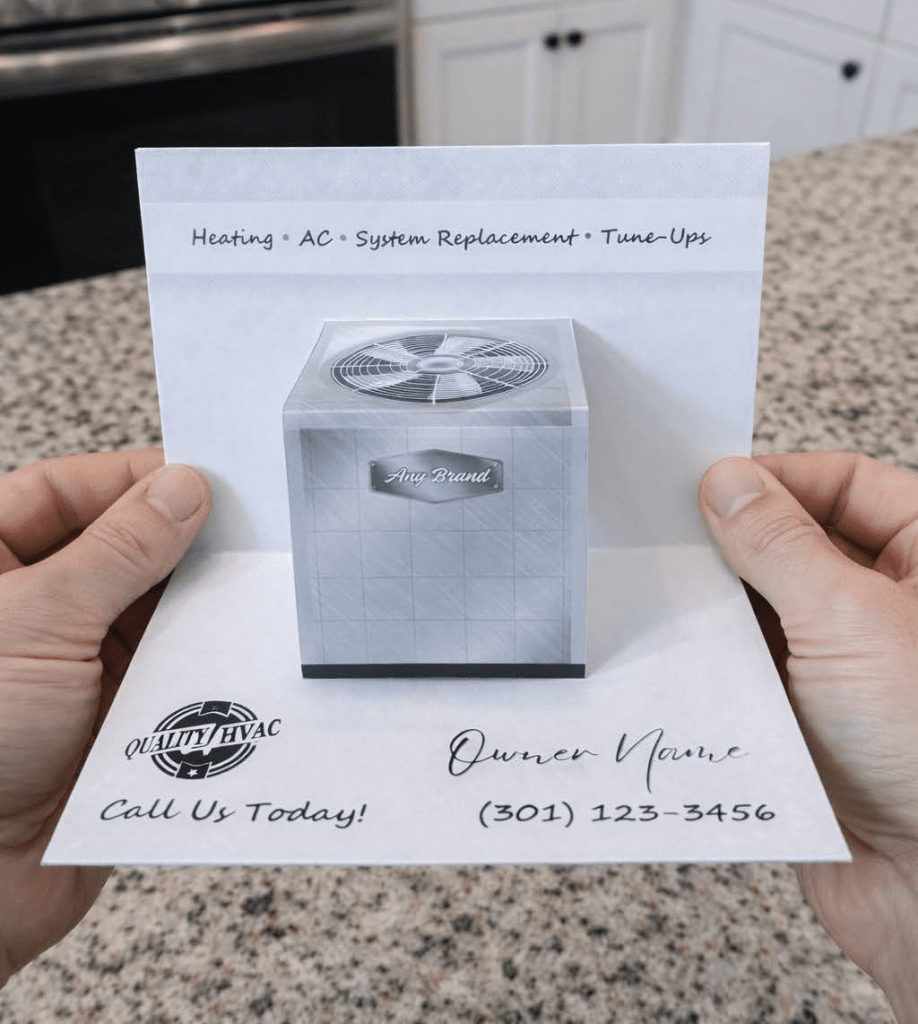
The 3D Cube interrupts routine. Its structure creates curiosity before any message is read. Homeowners interact with it physically first, then cognitively.
Physical Interaction Drives Attention
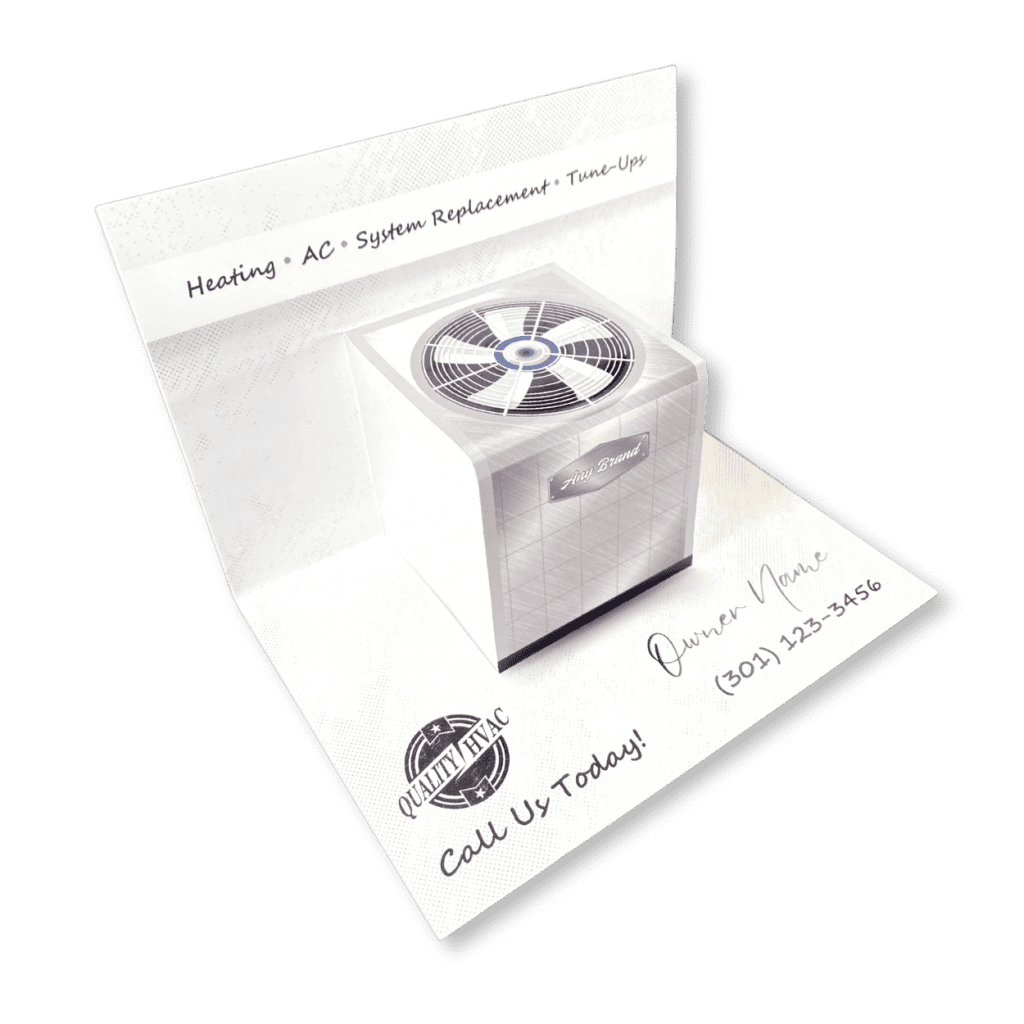
The cube format requires unfolding
Movement increases engagement time
Multiple faces invite inspection
The object feels intentional rather than disposable
This interaction alone separates the piece from standard advertising.
No Promotional Talk by Design
The 3D Cube performs by avoiding promotional framing. There is no pressure language, no countdown, no artificial incentive.
Why Non Promotional Messaging Works Better
Homeowners already noticed nearby work
The mailer explains context rather than selling
Trust comes from proximity, not offers
The message feels informational rather than transactional
By answering who did the work and why the homeowner is receiving the piece, resistance drops naturally.
Designed to Stay in the Home
Flat mailers are read and discarded. The 3D Cube often remains visible.
Reasons the 3D Cube Stays on Display
Compact object suitable for counters or desks
Neutral design avoids ad clutter appearance
Physical form resembles a keepsake rather than mail
Multiple viewing angles reinforce recall over time
Visibility turns a single delivery into repeated impressions without additional cost.
Shelf Life Versus Shelf Time
Traditional mail focuses on immediate response. The 3D Cube focuses on presence.
Extended Exposure Advantages
Repeated passive impressions
Brand recall without repeated outreach
Increased likelihood of delayed response
Higher perceived legitimacy
Homeowners may not act immediately, but the piece remains available when the need arises.
Built for Local Context
The 3D Cube is strongest when tied to visible nearby work. It does not need to persuade relevance because relevance already exists.
Local Context Over Advertising Claims
Neighborhood proximity establishes credibility
Visual cues match real services nearby
Messaging aligns with homeowner curiosity
No need for exaggerated value statements
The format supports awareness rather than persuasion.
Performance Without Pressure
The 3D Cube outperforms flat mailers by changing the role of direct mail. It stops trying to close and starts reinforcing presence.
What Drives Results
Attention through form
Trust through context
Retention through display
Recall through repeated visibility
These factors work together without relying on promotional tactics.
Conclusion
The 3D Cube succeeds where flat mailers fail by rejecting promotional noise and embracing physical engagement. Its dimensional form earns time, its message earns trust, and its presence earns longevity inside the home.
For neighborhood based services, staying visible often matters more than being loud.

Ronnie Lee Roberts II is a part owner and principal of R.L. Roberts II Design, LLC, a design studio specializing in high-impact direct mail and production-ready graphics. His background combines professional graphic design, technical documentation, and quality management, with a strong focus on custom 3DC® mailers designed for real-world use rather than presentation alone.
His work centers on dimensional direct mail programs for home-service businesses, including targeted 3DC® campaigns tied to recent projects and neighborhood outreach. Additional experience includes facilities and wayfinding graphics, service-based marketing materials, and structured documentation for regulated and mission-driven organizations such as The Arc and United Way. His approach emphasizes clarity, consistency, and effectiveness across print and physical marketing environments.