The Purpose of Source Inspection
A source inspector verifies that products, documentation, and manufacturing activities meet specified requirements before shipment or customer acceptance. The inspection process focuses on confirming compliance to drawings, purchase orders, technical specifications, revision-controlled documentation, and customer requirements.
In aerospace, defense, precision manufacturing, and regulated production environments, inspections are often structured around traceability, dimensional accuracy, process compliance, and documented verification.
Documentation Review
One of the first areas reviewed during a source inspection is documentation. Inspectors commonly verify that the correct engineering drawings, revisions, specifications, and customer requirements are being used during production.
Source inspectors may review:
- Engineering drawings
- Purchase orders
- Customer specifications
- Manufacturing travelers
- Inspection reports
- Revision-controlled procedures
Revision mismatches are a common source of manufacturing and compliance issues, making document verification an important part of the inspection process.
Material and Certification Verification
Source inspectors often review material and process certifications to confirm compliance with contractual and technical requirements.
This may include verification of:
- Material certifications
- Heat lot traceability
- Special process certifications
- Coating or plating records
- Weld certifications
- Calibration records
- FAIR documentation
Dimensional Verification
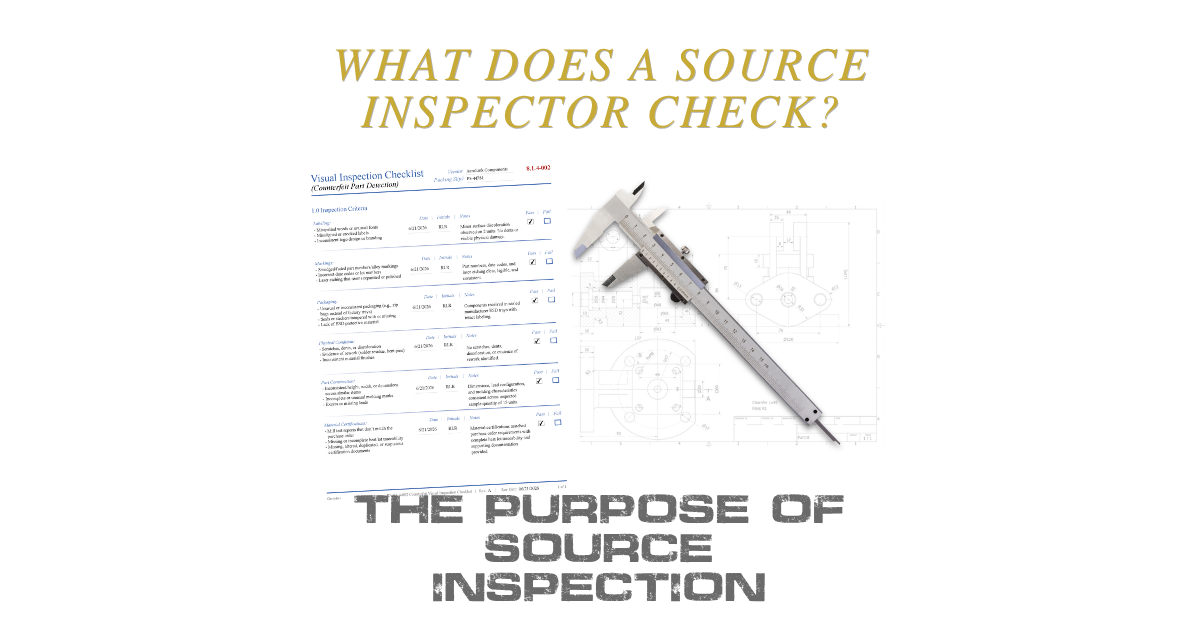
Dimensional inspection is another major part of source inspection activity. Depending on the product and inspection scope, inspectors may use:
- Calipers
- Micrometers
- Height gages
- Thread gages
- Pin gages
- Surface plates
Critical features are verified against engineering drawings and tolerance requirements to help ensure products meet specification.
Visual Inspection and Workmanship Review
Visual inspection activities help identify workmanship concerns such as:
- Surface damage
- Burrs
- Sharp edges
- Improper labeling
- Missing hardware
- Coating defects
- Weld quality concerns
- Packaging issues
Inspectors may also observe manufacturing operations directly to verify that processes are being performed in accordance with approved procedures or customer expectations.
Traceability and Packaging Verification
Traceability verification is especially important within aerospace and defense manufacturing environments. Source inspectors may confirm that serialized components, raw materials, certifications, and manufacturing records remain properly linked throughout the production process.
Packaging and shipment preparation may also be reviewed to ensure products are protected, labeled correctly, and prepared according to customer requirements before release.
Why Independent Source Inspection Matters
The overall purpose of source inspection is not simply to find defects. Effective inspections support communication, reduce customer risk, reinforce process accountability, and help ensure products are delivered with accurate supporting documentation and verifiable inspection records.
Independent source inspection services provide an additional layer of oversight for organizations seeking structured verification before shipment or final acceptance.